How to Start a Frozen Food Business in Nigeria: A Step-by-Step Guide
SwiftPOS Team
Published October 24, 2026

Are you tired of seeing your profit margins melt faster than ice cream on a Lagos afternoon, simply because you can't keep track of your stock or sales effectively? It's a painful reality for many Nigerian entrepreneurs, especially in the frozen food business, where an estimated 30% of small businesses fail within their first year due to poor inventory management and unexpected costs. If you're looking to start a frozen food business in Nigeria, you need more than just capital; you need a solid plan.
A busy frozen food market stall in nigeriaThe Reality Check: What Nobody Tells You About the Frozen Food Business Nigeria
Let's be honest, everyone sees the success stories – the bustling frozen food shops in markets like Balogun or Onitsha, moving cartons of chicken and fish like hot akara. What they don't tell you is the struggle that happens behind the scenes. Many people jump into this business thinking it's just about buying cheap and selling dear, but the margins are thinner than you think, and the risks are significant.
One major misconception is the sheer cost of maintaining cold chain integrity. A power outage that lasts just a few hours can turn a freezer full of valuable stock into a complete loss. In 2026, with the fluctuating power supply across Nigeria, relying solely on PHCN is a gamble you simply cannot afford. You'll need a reliable generator, and that means factoring in fuel costs that can easily run from ₦25,000 to ₦120,000 monthly, depending on how often you're running it and the size of your unit. This isn't a "nice-to-have"; it's a non-negotiable expense that significantly impacts your overall business capital.
Then there’s the inventory. Frozen foods have expiration dates, and if you don't manage your stock rotation properly, you'll be throwing away money. I've seen countless businesses in places like Computer Village, who tried to expand into frozen foods, get caught out because they underestimated the complexity of managing perishable goods. It's not like selling phones where an item can sit for months without losing value. With frozen foods, every day counts. You need systems in place to track expiration dates, monitor sales trends, and know exactly what you have on hand. Otherwise, those supposed profits from your frozen foods startup will quickly disappear. If you're currently using paper ledgers or basic spreadsheets, you're already behind the curve and likely losing money without even realizing it. Read up on why manual retail management is costing Nigerian shops money to truly understand the hidden drain.
What You Actually Need to Get Started
Before we even talk about opening your doors, you need to understand the financial bedrock. This isn't just a list; it's a breakdown of what you'll realistically encounter. These figures are for 2026, so adjust your expectations accordingly.
Non-Negotiables (Must-Haves):
- Chest Freezer(s): You absolutely cannot run a frozen food business without proper storage. For a small startup in a local market, you're looking at ₦180,000 for one decent unit, stretching up to ₦450,000 or more for larger capacities if you're aiming for a mini-store. Don't skimp here; quality freezers save you money in the long run.
- Initial Stock: This is your lifeblood. Starting small, you might need ₦150,000 for a few cartons of popular items like chicken or fish. For a more diverse initial inventory, especially if you're targeting a busier area, prepare to spend up to ₦700,000. Think about sourcing from major markets like Alaba or Kano textile market for good wholesale prices, even for frozen goods.
- Shop Rent (Annual): This varies wildly. A small stall in a community market could be as low as ₦80,000 annually. However, if you're eyeing a prime location in a bustling city like Lagos or Abuja, expect to pay up to ₦2,500,000 per year. Remember, rent is paid annually in Nigeria, so factor that lump sum into your initial business capital.
- Generator: As I mentioned, this is not optional. A small "I-better-pass-my-neighbour" generator can start from ₦70,000, but for more reliable power and slightly larger capacity (say, 3.5KVA), you're looking at ₦280,000.
- Business Registration (CAC): Don't skip this. Registering your business name with the Corporate Affairs Commission (CAC) will cost you between ₦25,000 and ₦60,000, depending on whether it's just a business name or a limited company. It legitimizes your operation and builds trust.
- Basic Shop Renovation/Setup: Even a basic setup needs shelving and signage. Budget around ₦50,000 for a simple stall, or up to ₦300,000 for a more presentable mini-store.
- Staff Salary: If you can afford an assistant, it takes a huge load off. A single salesperson could cost you ₦40,000 to ₦80,000 monthly.
- Transportation/Logistics: For restocking, you'll need to budget ₦15,000 to ₦70,000 monthly, depending on your proximity to wholesalers and the volume you're moving.
- Miscellaneous/Contingency: Always have a buffer for unexpected repairs or small purchases. ₦10,000 to ₦50,000 monthly is a sensible range.
The Complete Step-by-Step Breakdown
Starting any business in Nigeria requires grit, but a frozen food business Nigeria has its unique demands. Here’s how you can approach it systematically.
Step 1: Market Research and Niche Identification
Before you buy a single carton of fish, you need to understand your market. Who are your potential customers? What are they already buying? Are there specific frozen foods that are in high demand but short supply in your chosen area?
Walk around your target neighborhood. Talk to people. Visit existing frozen food vendors and observe their stock, pricing, and customer flow. Is there a gap for specific products like exotic seafood, processed meats, or even vegetarian frozen options? A provision store in Surulere might thrive on chicken and turkey, but a shop in Lekki could do well with imported frozen vegetables or specific cuts of beef. Identifying a niche can give you a competitive edge. Don't just assume; gather data.
Step 2: Secure Your Location and Essential Equipment
Once you know your market, find a strategic location. Visibility and accessibility are key. A shop near a residential area, a busy junction, or even within an existing market can significantly boost your foot traffic. Negotiate your rent (remember, it's annual!) and ensure the space has adequate power supply and security.
After securing your space, invest in your freezers and a reliable generator. These are your primary assets. Don't go for the cheapest option if it means sacrificing quality or efficiency. A breakdown will cost you far more in lost stock and sales. Consider power stabilizers to protect your equipment from voltage fluctuations. You can explore different POS hardware setups for supermarkets to get an idea of what works.
Step 3: Sourcing Your Initial Stock
This is where your profit margins are truly made. You need to identify reliable suppliers who offer competitive wholesale prices. Head to major markets like Alaba International Market or dedicated cold storage facilities in port cities. Building good relationships with a few trusted wholesalers can ensure consistent supply and better pricing.
Start with popular items like frozen chicken (drumsticks, wings, laps), turkey, and different types of fish (mackerel, croaker). As your business grows and you understand your customer base better, you can diversify. Always inspect the quality of goods upon delivery and ensure they are properly frozen. Remember, you’re dealing with perishable goods, so quality control is paramount.
Step 4: Business Registration and Compliance
Don't operate in the shadows. Registering your business with the Corporate Affairs Commission (CAC) is crucial. This gives your business a legal identity and can open doors to better supplier deals or even future financing. You might also need permits from your local government authority, especially for food retail.
Beyond registration, consider food handling certifications if available in your state. This adds credibility and assures customers of your commitment to hygiene. Compliance isn't just about avoiding trouble; it's about building a reputable and sustainable brand in the food retail sector.
Step 5: Set Up Your Operations & Inventory Management System
This is where many businesses stumble, especially in the frozen food sector. You need a robust system to manage your sales, track your inventory, monitor expiration dates, and understand your true profit. Relying on paper or basic Excel sheets for a frozen foods startup is a recipe for disaster.
Imagine a busy afternoon: customers are coming in, the generator is humming, and you're manually trying to jot down sales, track what's leaving the freezer, and remember which carton of chicken arrived last week. It's chaotic, prone to errors, and makes it impossible to know your actual stock levels or profit margins. This is exactly why you need a reliable Point-of-Sale (POS) system.
A tool like SwiftPOS NG can transform your operations. It helps you manage products and stock, track sales, handle different payment methods, and even monitor expiration dates – a critical feature for frozen food. You can input your initial stock, update it as you buy more, and every sale automatically reduces the stock count. This means you always know what you have, what's selling fast, and what's nearing expiry, helping you to avoid losses from spoilage. It also provides insights into your best-selling items, helping you make smarter purchasing decisions. Learn more about how to manage your retail store using AI in Nigeria.
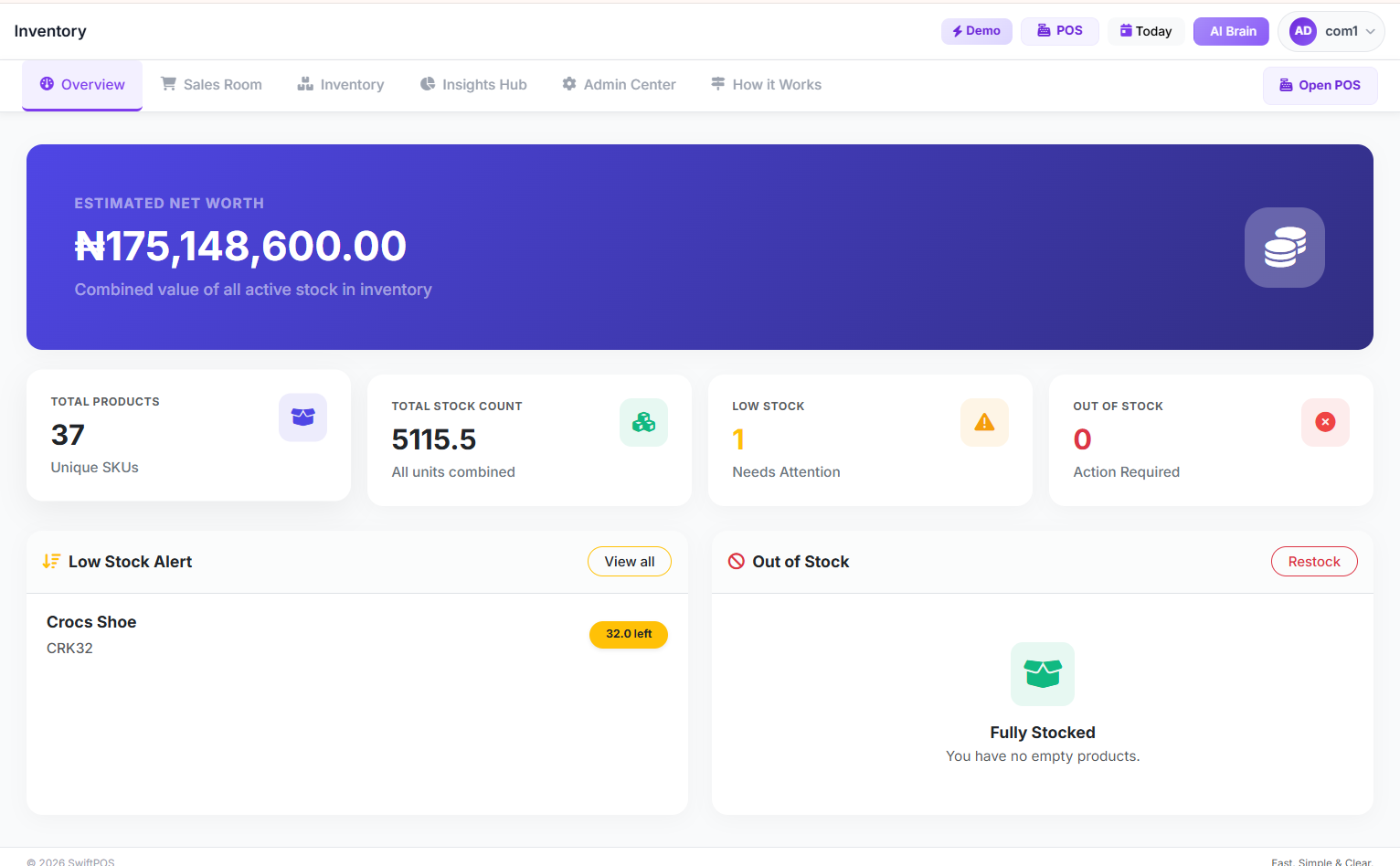 SwiftPOS Inventory Management Dashboard showing product lists, stock levels, and categories
Step 6: Pricing Strategy and Marketing
Your pricing needs to be competitive yet profitable. Research what others are selling similar products for in your area. Consider your cost of goods, operational expenses (including generator fuel and staff salaries), and desired profit margin (typically ₦1,000 to ₦5,000 per unit/carton, but this varies wildly).
For marketing, start local. Use clear signage. Offer introductory discounts. Engage with customers. Word-of-mouth is powerful in Nigeria. Consider creating a WhatsApp group for regular customers to share daily deals or new stock arrivals. You can also explore WhatsApp Automation for customer notifications. Simple, consistent efforts can build a loyal customer base for your frozen food business Nigeria.
5 Mistakes That Cost Nigerian Business Owners the Most
Starting a frozen foods startup is exciting, but there are pitfalls. I’ve seen these mistakes play out time and again, draining capital and crushing dreams.
- Underestimating Power Costs and Backup Needs: Many new owners budget for one freezer and minimal generator use. Then NEPA strikes, generator fuel prices spike, and suddenly, their entire stock is at risk. A small frozen food shop in Aba once lost over ₦300,000 worth of turkey because their generator broke down during a prolonged power outage, and they had no contingency. Always budget more for power than you think you need.
- Poor Inventory Management: This is a killer for food retail. Without proper tracking, you won't know what's expiring, what's selling, or what you actually have. This leads to dead stock, spoilage, and missed sales opportunities. If you're manually counting cartons, you're losing money. Check out Nigerian Retailers: Inventory Management Mistakes Crushing Your Profits for a deeper dive.
- Neglecting Customer Service: In a competitive market, a friendly face and good service can make all the difference. A rude salesperson or long wait times can send customers straight to your competitor, especially when buying essentials like food. Train your staff, if you have any, and always prioritize the customer experience.
- Ignoring Financial Tracking: Many businesses only track sales revenue. But what about expenses? Rent, fuel, transportation, staff salaries – these eat into your gross profit. Without tracking true net profit, you might think you're doing well, only to find you're barely breaking even. This is the part most people don't expect. You need to understand your POS system ROI to truly see value.
- Lack of Diversification: Sticking to just one or two products might seem simple initially, but it limits your earning potential and makes you vulnerable to market fluctuations. A frozen food business in Nigeria thrives on variety. Once you're stable with core products, slowly introduce new items that align with your customer's needs and preferences.
How to Know If You're on Track (Success Metrics)
So, you've started your frozen food business. How do you know if it's actually succeeding? You need to measure. These are your Key Performance Indicators (KPIs) – the vital signs of your business.
- Monthly Sales Revenue: This is your top-line number. For a small to medium-scale frozen food business, you should aim for ₦250,000 to ₦1,200,000 in monthly revenue. Is it growing? Stagnant? Declining?
- Gross Profit Margin: This tells you how much money you make from sales before deducting operating expenses. Calculate it by (Total Revenue - Cost of Goods Sold) / Total Revenue. You want this percentage to be healthy, typically above 20-30% for food retail, though it varies.
- Net Profit: The most important metric. This is what you actually take home after all expenses are paid. If your net profit is consistently low or negative, you need to re-evaluate your pricing, costs, or operations. A good POS system like SwiftPOS NG allows you to and expenses directly, giving you a clear picture.
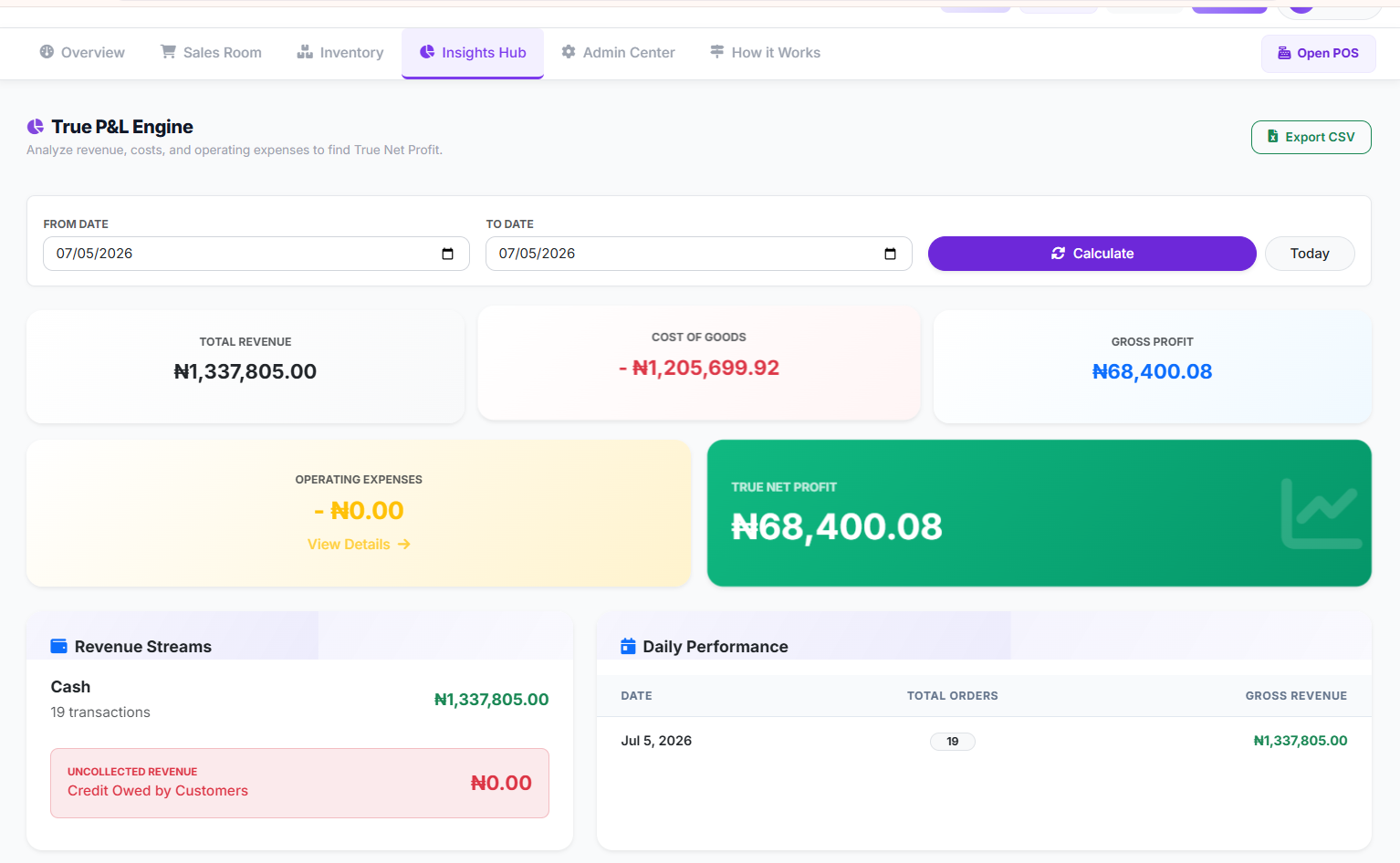 track your monthly profit margins
- Inventory Turnover Rate: How quickly are you selling your stock? A high turnover rate is good for perishable goods like frozen foods, as it means less risk of spoilage. If stock sits for too long, it's a red flag.
- Customer Retention Rate: Are your customers coming back? Loyal customers are the backbone of any successful business. Track how many repeat customers you have.
- Power Cost as a Percentage of Revenue: This is crucial for frozen foods. If your generator fuel costs are eating up too much of your revenue, you might need to reconsider your power solutions or operational hours.
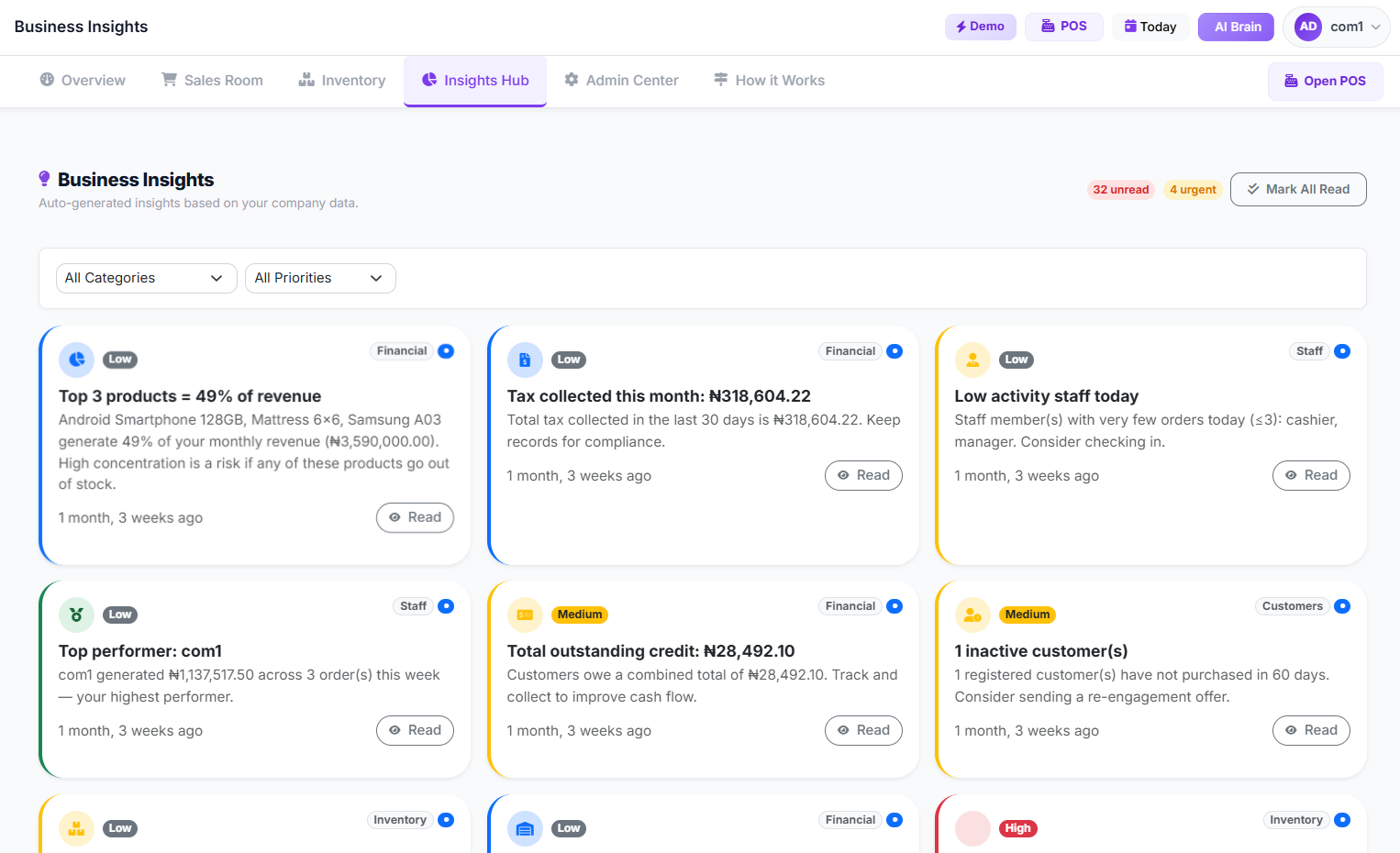 SwiftPOS Business Insights dashboard showing revenue trends and product performance
Real Questions People Ask (FAQ)
Starting a frozen food business in Nigeria comes with a lot of questions. Here are some of the most common ones I hear.
How much capital do I really need to start a frozen food business in Nigeria?
Honestly, the business capital you need varies widely, but for a modest frozen foods startup, you should realistically budget between ₦570,000 and ₦1,000,000 to cover freezers, initial stock, annual shop rent, a generator, and basic setup costs in 2026. This doesn't include monthly running costs like fuel and potential staff salaries. If you're aiming for a larger setup or a prime location in a city like Lagos, prepare for significantly higher costs, possibly up to ₦3,500,000 or more.
Is the frozen food business profitable in Nigeria?
Yes, the frozen food business in Nigeria can be very profitable, but it's not a get-rich-quick scheme. Typical profit margins per unit or carton can range from ₦1,000 to ₦5,000, depending on the product and your buying power. However, profitability hinges heavily on efficient inventory management, minimizing spoilage, managing power costs effectively, and maintaining a consistent customer base. Businesses that fail often do so due to poor planning and execution, not a lack of market demand.
What are the biggest challenges in running a frozen food business in Nigeria?
The primary challenges revolve around maintaining the cold chain. This includes inconsistent power supply, high fuel costs for generators, and the risk of stock spoilage if equipment fails. Other challenges include sourcing quality products at good prices, managing inventory effectively to prevent waste, and navigating market competition. Logistics for restocking and fluctuating market prices also pose significant hurdles for food retail businesses.
How can I make my frozen food business stand out from competitors?
To stand out, focus on exceptional customer service, offer a unique product mix (e.g., specific cuts of meat, organic options, or specialty seafood), maintain impeccable hygiene, and ensure consistent product availability. Providing reliable delivery services or offering loyalty programs can also set you apart. Leveraging technology, like a good POS system, to manage your operations efficiently and give accurate stock information to customers can also be a huge differentiator.
Do I need a POS system for a small frozen foods startup?
Absolutely. While it might seem like an extra expense initially, a POS system is a game-changer for a frozen food business Nigeria. It helps you track inventory (crucial for perishables), manage sales, monitor expenses, identify best-selling products, and even track customer debts. This level of insight prevents losses from spoilage and theft, helps you make smarter purchasing decisions, and ultimately boosts your profit margins. For a business dealing with perishable goods, it’s an investment that pays for itself by preventing costly mistakes. You can explore the benefits of a modern POS system for your business.
Your Next Move
Starting a frozen food business in Nigeria is a viable venture, but it demands careful planning, a clear understanding of costs, and a commitment to efficient management. Don't just dream about profit; build a system that delivers it.
Ready to take control of your frozen food business? Get started with a 14-day free trial of SwiftPOS NG today and experience how streamlined operations can boost your profits. Visit app.swiftpos.ng to sign up and transform your business management.